February 24, 2022

Guest post: Kristen Davis, CEO & Founder of Athenian Marketing.
Marketing is an investment in your business and is not an expense. So how much should an organization invest in marketing? Unfortunately, there isn’t a hard and fast number that every business should adhere to because each company is different, and every business is in a different marketing stage. But, if you need a “rule of thumb,” we recommend allocating 5-10% of your gross revenue to marketing. The range is in place because there are several factors to consider when determining a marketing budget, so a hard and fast number is a challenge. Let’s look at the factors that impact how much your business should allocate for marketing.
Foundational Elements
Foundational marketing elements include your brand, website, a marketing plan, literature & social media platforms. Think of foundational elements as the basis of your marketing plan. Without them, it will be hard for your marketing to be consistent and won’t provide your customers, or potential customers, with a focused view of your business.
If you do not have your foundational marketing elements in place, plan to allocate additional funds to marketing to establish those foundational elements.
Brand Awareness
Once your foundational elements are in place, take a look at your brand awareness with your target audience. Does your prospective customer know about your business? If your answer is no, or you aren’t sure, you’ll want to allocate a more significant percentage of funds to your marketing budget. Building up your brand awareness paves the way for new customers to recognize your brand and your business and make the conscious decision to buy from you.
Think about some of the specific brands you know. They didn’t get there by shying away from spending on their brand awareness. They got there by marketing their brand to their target audience. Focusing on brand awareness is essential regardless of business size. Remember that you don’t need everyone to know about your business. You need your target audience to know about your business. That is where the focus should be. Check out our “Whats Your Brand Identity?” post.
Events and Tradeshows
If events and tradeshows are part of your marketing budget, be aware that they can eat up a large chunk of your budget and may not provide the dividends needed to reach your goals. Think booth costs, team travel, team hotels, shipping materials, and more.
Now that we’ve outlined factors that can impact your budget, how do you decide how to divvy up the budget? That’s where your marketing goals come in. What are the marketing goals for the coming year? So before determining a budget, determine your goals. (If you need a little help, check out our Marketing Planning blog post!)
Once goals are determined, determine approaches to help your organization meet those goals, and then put numbers to the strategy.
But what if you misallocated the budget? Not to worry. Since marketing is trackable, scalable, and can be layered. Thus, effective strategies can constantly be enhanced or modified to capture new or different audiences. Isn’t marketing great!
If you face the budget conversation in your business and need a bit of help wading through the details, give us a call. We’d be happy to talk through the details and give you a few pointers.
This post is from Kristen Davis, CEO & Founder of Athenian Marketing.
February 22, 2022

Take a minute to count all of the electronic devices in your home, including phones, computers, and tablets. The digital age is booming. But is print marketing still effective and profitable? What are the benefits of promoting brands on the glossy pages of trade publications or with brochures, posters, and postcards? Even if print is still a viable option, how do you know if it is suitable for your company?
We strongly believe that many brands have a great deal to gain from print advertising. It can be a substantial complementary marketing channel to all digital and other traditional campaigns. So let’s take a look at how print can help you develop a strong relationship with your customers.
The Meet-Cute: Make a more tactile impactful introduction and first impression.
Anyone can find pretty much anything on the internet if they know how to look for it. An excellent digital campaign can put your brand in front of a customer even if they don’t type the exact words used to describe your company. However, those search result pages can be cluttered with a lot of images and information. Finding a perfect match in a noisy crowd can be very difficult. Print gives companies captive readers who spend longer looking at published pages than digital sites.
With print, a customer has a chance to meet your brand and get a more tangible feel for who you are for a company before they go online. Aligning your brand with trade information or special interests helps readers to identify with your products and services in a way that relates directly to their wants and needs. Also, studies have shown that a reader being able to feel a page in their hands provides a more lasting experience than viewing an article on a screen.
The scope and depth of all digital marketing opportunities can be overwhelming and confusing, especially if you’re a small business or new to the digital playing field. For companies wanting to keep things simple, print, in all its many avenues, can feel much more familiar. Having a sales executive or team dedicated to responding to inquiries and requests obtained from the print promotions can allow you to see immediate results.
Friends First: Take the opportunity to hang out with your customers for a while.
A website can be gone with one click, but we’ve all got those magazines and brochures that just seem to linger for a while before heading to the recycle bin. They pile up on a bookshelf, side table, or the corner of our desk. The pages within those publications are windows to potential customers; subtle, casual ways to reach readers with no pressure. Creating a “coffee table piece” puts you in the middle of that person’s life without an overwhelming attack of cold calling and emailing.
Developing your brand with a customer in an organic way can help that customer to feel more comfortable approaching your company for information and ultimately making a purchase. Sometimes, a brand can come on too strong with a barrage of digital ads and sponsored social media posts, causing a customer to block all of your promotional materials. Each time a reader flips through a magazine or publication, your ad will be right there in a reassuring way. They may choose to turn the page, but even a glimpse can leave an impact.
Also, unlike the never-ending search result pages of the internet, your brand will not be displayed next to a half dozen other companies. When a customer, potential or current, sees your marketing message in print, the images and words on the page get the final say in that interaction.
A Foundation of Trust: Add extra print marketing touches to campaigns to build a stronger relationship.
As of Q4 of 2018, Stanley Black & Decker had the largest portion of the market share for power tools. The next largest market shareholder sold almost an entire $1 Billion less than B&D. Despite being the top-selling and one of the most well-known brands within their industry, you can find ads for Black & Decker Power Tools within the pages of many different publications, in addition to their print marketing channels. A well-diversified marketing strategy keeps their brand and products at the top of mind with corporate buyers and retail customers.
Even after a customer has decided to work with your company, print can offer a sense of support to your brand image. While casually reading a magazine or other publication, their eyes are drawn to a familiar image, your logo. Maybe they even see a product they’ve already purchased or information about a service they’re already using. Seeing your company, those products or services, pop up in the middle of their everyday life can be so reassuring. The customers can see and feel that you are still present and still representing the values that lead them to choose you to begin with
You may not think that print is necessary or beneficial for your company and brand. However, you may be surprised to see how publication reader demographics overlap with your target audience. We can break down whom you want to reach and how to get in front of them across all channels in the most efficient way possible. With our expertise in graphic design, print advertising, and trade show displays, we have all the right tools for your small business to succeed.
Contact us today to discuss designing the perfect print marketing plan for you.
February 16, 2022
After two decades online, what have we learned about website design and development?
Web website design and development has come a long way in the past 20 years. Through trial-and-error, evaluation, experience and sophisticated research, experts have begun to get a grasp on what works. Website design and development need to be visually pleasing, engaging, and brand aware while instilling credibility.
While the appearance of a website is important, recent studies have concluded that 80% of users value function over aesthetics. The efficiency and flow of the site must engage a customer, pulling them along an organic journey with no speedbumps. The site also needs to be functional for your company as a brandingand marketing tool. What are your website goals? Do you want your site to help you acquire information, increase sales, or accumulate qualified leads? Let’s take a look at what we consider is the ideal mix of aesthetics and functionality for a successful website.
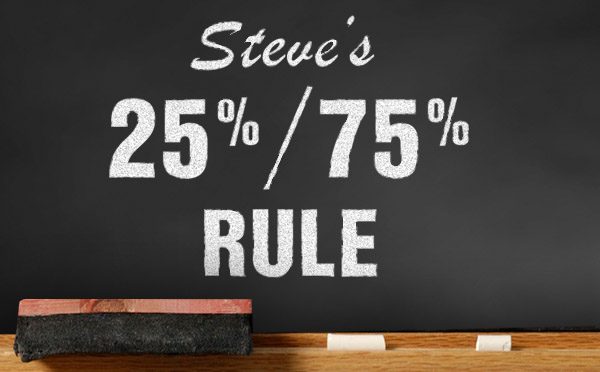
25%: Aesthetics—Easy on the eyes. Inviting to the brain. Effectively instilling brand confidence and recognition.
Let’s take a trip back in time to the dot-com boom; the early days of Yahoo! and eBay. Those were the days of cheesy clipart, textured backgrounds, ridiculously bright color schemes, and all the text. Oh, and let’s not forget the overuse of Comic Sans font. Maybe it was the simplicity of the structure of websites at the time, but the focus definitely seemed to be more on “cool” graphics than an engaging, welcoming, and pleasing user experience.
Here in the 21st century, we strive to ensure companies get a website that grabs the attention of users by communicating a compelling brand image. Using data-based marketing and branding, companies are able to target more specific audiences and appeal to them with a more personalized user experience. How a website looks
75%: Functionality—Navigation, Information Architecture, Graphic User Interface, and Marketing Objectives.
Internet users are somewhat picky when it comes to the navigation of websites. Most of the time, a user doesn’t want too much information on one page, but they also don’t want to have to do a lot of clicking to find what they are looking for. So, many companies struggle to organize their site in a way that allows customers to quickly locate the exact products or information they want, without overloading users with too many menus or too much text.
Insights taken from the data within your site, as well as the industry as a whole, can help to create a user experience that is easy and will keep them coming back. We can use SEO data to know how your customers are searching for and finding you, as well as how they interact with your site. Knowing what is important to potential customers not only allows you to set up pages efficiently, but can also provide some crucial information about your products and services from the customer perspective.
Conversions, Transactions, and Sales…Oh My!
A website is simply a hub for companies and customers to exchange resources. Your users come to your site in hopes of getting information, products, or services. You want to get the sale, an email address for future communication, or simply some data. A successful visit means everyone walks—err, clicks—away with something.
In the modern, digital age, a company can choose to track pretty much any kind of interaction to track in order to learn how their customers use a site and where they are possibly losing users. If a file download or form submission is faulty or even just inconvenient, that’s a common place for users to drop off and abandon one site in favor of something easier to use. If a cart checkout lags or appears to stall out, credibility comes into question. Once a user ends their session due to functional problems, both user and brand are left unsatisfied with the exchange.
Finding balance between design that is engaging while still being easy to use can seem like a daunting task. With a strong grasp on best practices and resources to create a winning strategy, we can help you rise to the top of the search results and the industry.
Website design and development.
Contact today to learn more about website design and development. 262-6573-3714..Ask for Steve!!!


