


Title: How Lightweight Materials Like EPP Are Changing the Game in Utility Construction
July 2, 2026

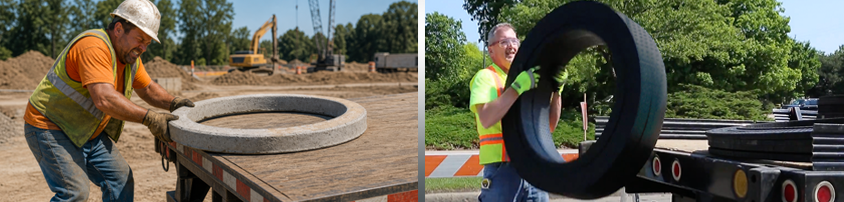
For decades, utility construction has relied on heavy materials to solve infrastructure challenges. From concrete manhole rings to concrete riser rings and other traditional components, weight was often viewed as a sign of strength and durability.
Today, that mindset is changing.
As municipalities and contractors face increasing pressure to improve safety, reduce labor costs, shorten road closures, and maximize infrastructure budgets, lightweight materials are emerging as a smarter alternative. Among the most promising of these materials is expanded polypropylene (EPP), a high-strength, energy-absorbing plastic that is transforming how utility infrastructure is designed, installed, and maintained.
The shift toward lightweight materials is not simply about convenience—it is about improving efficiency, safety, and long-term performance across the entire lifecycle of a project.
Why Weight Matters in Utility Construction
Every infrastructure project involves moving materials, equipment, and people. When components are excessively heavy, the impacts extend far beyond installation.
Heavy materials often require specialized lifting equipment, larger crews, additional transportation resources, and longer installation times. They can also increase worker fatigue and elevate the risk of injuries related to lifting, handling, and repetitive motion.
For municipalities, these challenges translate into higher project costs, longer road closures, increased equipment expenses, and greater disruption to the public.
As labor shortages continue to affect the construction industry, many organizations are looking for ways to complete projects more efficiently without compromising performance. Lightweight materials offer a practical solution.
The Safety Advantages of Lightweight Materials
Worker safety remains a top priority on every jobsite. Material handling and lifting activities can place significant physical demands on construction crews, making ergonomics and worker safety important considerations during product selection.
By reducing the weight of infrastructure components, contractors can significantly minimize the physical demands placed on crews. Lighter materials reduce the likelihood of strains, sprains, and other lifting-related injuries while improving overall jobsite ergonomics.
The benefits extend beyond injury prevention. Reduced physical strain can lead to improved worker morale, fewer worker replacement hours, and lower workers’ compensation costs over time.
For municipalities and contractors alike, safety improvements often translate directly into operational savings.
Improving Efficiency Without Sacrificing Performance
Historically, lightweight materials were sometimes perceived as less durable than traditional alternatives. Advances in material science have changed that perception.
Modern engineered materials such as expanded polypropylene combine exceptional strength with significantly lower weight. These materials can withstand demanding environmental conditions while delivering the handling advantages associated with lightweight construction.
As a result, contractors can complete installations more quickly, reduce equipment requirements, and minimize disruptions to surrounding communities.
Shorter installation times also mean reduced road closure durations, less traffic congestion, and fewer emissions from idling vehicles—benefits that support both operational and environmental goals.
The Long-Term Cost Benefits of Lightweight Infrastructure Components
The true value of lightweight materials extends well beyond installation day.
When heavy lifting equipment is no longer required, organizations can reduce equipment purchase costs, rental expenses, storage requirements, maintenance costs, and transportation fees. Shipping costs are often reduced as well because lighter products are easier and less expensive to transport.
These savings can be substantial over the life of a project, particularly for municipalities managing large numbers of utility structures throughout their systems.
In many cases, lightweight materials help reduce both direct project costs and the long-term costs associated with maintaining infrastructure assets.
How Expanded Polypropylene (EPP) Is Changing the Industry
Expanded polypropylene (EPP) has become one of the most innovative materials used in utility construction today.
Known for its high strength-to-weight ratio, EPP provides excellent durability while remaining remarkably lightweight. It is resistant to moisture, chemicals, road salts, and corrosion, making it well suited for challenging underground environments.
Unlike traditional concrete manhole rings, which can crack, crumble, or deteriorate over time, EPP maintains its structural integrity even when exposed to harsh conditions. Its energy-absorbing properties also help it withstand impacts during transportation, handling, and installation.
These characteristics make EPP an ideal material for modern utility infrastructure applications.
PRO-RING: A Lightweight Solution Built for Long-Term Performance
Cretex Specialty Products has embraced the advantages of EPP through its PRO-RING® system.
PRO-RING® manhole adjustment rings are manufactured from expanded polypropylene and are designed to provide a faster, lighter, and safer alternative to traditional concrete riser rings and concrete manhole rings.
Weighing approximately 1/20th as much as comparable concrete grade rings, PRO-RINGs can be handled without heavy lifting equipment, reducing installation time and improving jobsite safety. Crews can complete installations more efficiently while minimizing physical strain and equipment requirements.
Beyond their lightweight design, PRO-RINGs offer exceptional durability. They are resistant to corrosion, road salts, chemicals, and moisture—common factors that contribute to the deterioration of traditional concrete systems. PRO-RINGs can help municipalities create longer-lasting, more reliable utility structures while reducing maintenance requirements over time.
The Future of Utility Construction
As municipalities continue to modernize aging infrastructure, the materials used in construction will play an increasingly important role in project success.
Lightweight materials such as expanded polypropylene are helping organizations improve safety, reduce costs, increase efficiency, and extend infrastructure life—all without sacrificing performance.
The result is a smarter approach to utility construction that benefits contractors, municipalities, and the communities they serve.
For organizations seeking a proven alternative to traditional concrete manhole rings, PRO-RING® manhole adjustment rings demonstrate how innovative materials can deliver meaningful advantages both today and for decades to come.