August 26, 2026
Small business owners should treat trade shows as measurable growth opportunities, not simply visibility plays. A busy booth can still disappoint if the message is forgettable, staff are unprepared, and follow-up is improvised. The strongest appearances work like campaigns: every decision supports a defined commercial outcome.
What Matters Most
A productive show starts long before setup day.
- Set lead and revenue targets before committing.
- Build the booth around one clear message.
- Brief staff on qualification, capture, and next steps.
- Promote the appearance before the doors open.
- Treat follow-up as part of the event.
Why So Many Booths Underperform
Businesses often spend heavily on floor space, travel, giveaways, and staffing, then rely on generic banners and casual conversations to justify the expense.
Common mistakes quietly drain the return:
- Messaging is too broad to give visitors a reason to stop.
- Staff collect names without identifying strong prospects.
- Graphics look pieced together instead of deliberately branded.
- Nobody owns the post-show sales process.
Plan Backward from the Result
Before booking space, decide what would make the event financially worthwhile. That target should guide everything that follows.
- Define the ideal prospect and desired next action.
- Set qualified-lead, pipeline, and revenue goals.
- Create booth graphics readable in seconds.
- Give staff a consistent opening message and qualification questions.
- Schedule coverage so the booth stays active.
- Use email, social media, partners, and invitations to drive traffic.
- Choose a lead-capture method that records useful context.
- Schedule the first follow-up touches before the show begins.
Make the Booth Look Like the Business You Want to Become
Trade show visitors make fast judgments, so visual consistency matters. Colorado companies seeking outside help can work with Guild Creative, a B2B marketing and creative agency serving Fort Collins, Boulder, Loveland, Longmont, Berthoud, and Greeley. Since 1999, the firm has completed 2,000-plus projects spanning logo design, branding, web design, print marketing, advertising, trade show graphics and signage, and strategic marketing. Guild Creative says its business model provides premium value at costs 25% below typical agencies. Small business owners preparing for an expo can call 262-573-3714 to discuss a coordinated presence designed to support growth.
Protect the Investment on the Way There
Trade show planning also includes getting expensive materials to the venue intact. Booth panels, banner stands, samples, cases, and display equipment can shift during transport and arrive damaged. Businesses handling their own hauling should keep a durable load restraint system available to secure display components inside a truck or trailer. Proper restraint helps prevent cargo movement and damage while equipment is in transit. It is a small operational purchase that can pay for itself by preventing one ruined booth setup.
Turn Contacts into a Sales Process
A lead becomes useful when someone knows what the prospect needs and what should happen next. Assign ownership before the event so promising conversations do not disappear during teardown.
The handoff can stay simple:
| Stage |
Owner |
Goal |
| Booth conversation |
Event staff |
Qualify and record context |
| Within 48 hours |
Owner or sales |
Send relevant outreach |
| First week |
Sales |
Book a call, quote, demo, or visit |
| Later follow-up |
Marketing and sales |
Nurture prospects not yet ready |
Questions to Answer Before Booking the Next Show
These purchase-stage questions help determine whether another event belongs in the marketing budget.
- How Much Should We Spend?
- Calculate the full cost, including space, travel, labor, graphics, freight, and follow-up. Compare it with the realistic value of the pipeline you expect to create. The right budget is one the opportunity can justify.
- How Do We Know Whether an Event Is a Good Fit?
- Study attendee profiles, exhibitors, and the problems the event addresses. Your buyers should be clearly represented, not merely possible attendees. A smaller, well-matched show may outperform a larger but less relevant one.
- Should We Hire a Designer?
- Professional design is valuable when existing materials are inconsistent or the event is strategically important. Strong design clarifies the offer rather than simply decorating the booth. Reusable assets can also improve returns across future events.
- What Should Staff Say?
- Give staff a natural opener, concise value proposition, and several qualification questions. Avoid rigid scripts that make conversations feel mechanical. Everyone should understand who matters most and what next step to request.
- How Fast Should We Follow Up?
- Reach priority leads while the conversation is still fresh. Reference what the prospect discussed instead of sending a generic thank-you. Continue with useful touches when a buyer is not ready immediately.
Make Every Show Build on the Last
Trade shows become more valuable when treated as strategic marketing investments rather than optional expenses. Clear goals improve planning, stronger execution creates better conversations, and disciplined follow-up converts attention into opportunity. Done well, one appearance can strengthen the sales pipeline and the brand long after the booth comes down.
August 7, 2026
Special Thanks to Ronald Hadley (ronald.hadley@biztipstoday.com).
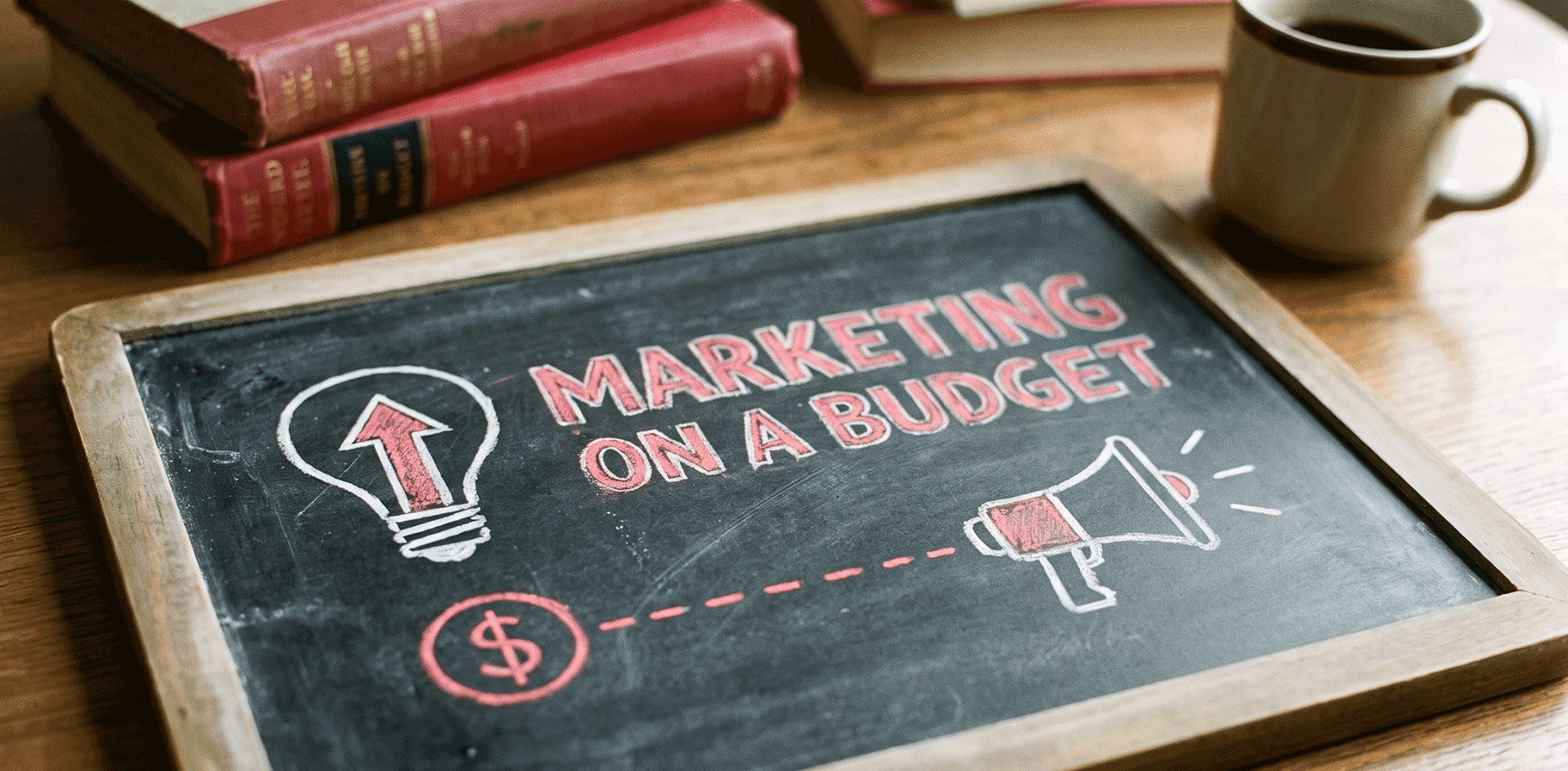
Small business owners running on limited marketing budgets often feel stuck between doing nothing and overspending on tactics that don’t stick. The real marketing pain points show up fast: rising ad costs, inconsistent leads, and the pressure to “be everywhere” while still handling day-to-day operations. These cost-effective marketing challenges can make budget constraints in marketing feel like a ceiling on growth. There’s a smarter way forward, affordable marketing strategies that focus on clarity, consistency, and the moves that earn attention without draining time or cash.
Pick 7 Budget-Friendly Tactics That Actually Move Customers
When money and time are tight, “more marketing” isn’t the goal, better marketing is. Use this short menu to choose a few moves you can sustain without burning out, then build consistency week by week.
- Post with a purpose (not just presence): Pick 1–2 social platforms where your customers already hang out, then commit to three repeatable content buckets (examples: “quick tips,” “behind the scenes,” “customer wins”). Create a simple cadence you can keep, like 3 posts per week plus 10 minutes a day replying to comments and DMs, because consistency beats occasional bursts.
- Start one “welcome” email marketing campaign: Set up a 3-email sequence: Email 1 delivers a useful freebie or your best tip, Email 2 shares your story + what you help with, Email 3 offers a clear next step (book, buy, visit). This works because email keeps you connected without paying for reach, and strong benchmarks like an ROI of $36 to $40 for every $1 spent show why email is often a budget hero.
- Claim local SEO wins that compound: Fully complete your business profile (hours, services, photos, and a short keyword-rich description), then add 3–5 photos each month. Ask for 2 reviews per week with a script you text right after purchase, and reply to every review within 48 hours, this builds trust and sends “active business” signals that can improve local visibility.
- Build “content basics” around customer questions: List the 10 questions you answer constantly (pricing, timelines, what to expect, common mistakes) and turn each into a short post, a one-page web article, or a quick video. The win here is efficiency: one idea becomes multiple assets you can reuse in social captions, emails, and sales conversations.
- Create one simple partnership offer: Identify 3 complementary businesses (not competitors) that serve the same audience, then pitch a “swap” that’s easy to say yes to, bundle flyers, co-host a mini event, or trade email shout-outs. Give them a ready-to-send blurb and a tracking code/coupon so both sides can see results without awkward guessing.
- Try a low-risk guerrilla marketing tactic with a tracking hook: Choose one attention-grabber that fits your brand and location, sidewalk signage on high-foot-traffic days, a pop-up demo, a “take one” tip card display, or a photo-worthy mini setup at a local event. Add one measurable hook (QR code, short URL, or “mention this phrase”) so you know if it worked and can repeat the winners.
Know When to Refresh Your Logo—and Do It Cheaply
Once you’ve picked a few budget-friendly tactics, make sure they all point back to a logo that still looks like you. If your current logo feels outdated, mismatched with what you sell today, or just doesn’t look as polished as your competitors’, it may be time for a refresh. A small update can make your brand feel more modern and credible at a glance, and that visual lift carries through everything you post, print, and share. For a low-cost option, try a tool to design logos and create a new version quickly. These tools let you build an appealing, creative logo by starting with ready-made templates and then tweaking the fonts and colors to fit your style.
Budget-Friendly Marketing FAQs (Without the Overwhelm)
Q: How do I market consistently when I’m already busy?
A: Pick one “home base” channel and commit to two tiny actions per week, like one post and five outreach messages. Batch 30 minutes to draft ideas, then schedule them so you are not starting from scratch every time. Consistency comes from a small minimum you can keep even on hectic weeks.
Q: What should I do first if I’m not “good at marketing”?
A: Start by copying structure, not style. Use a simple formula: problem, quick tip, proof, clear next step. Then reuse it for five posts so you build skill through repetition.
Q: How can I stay consistent without burning out or getting bored?
A: Create a weekly theme and rotate three content types: teach, share a story, invite action. Keep a running note of customer questions and turn each into a post. Momentum is easier when you stop reinventing the wheel.
Q: What should I track if I can’t afford fancy tools?
A: Track three numbers: leads, sales, and cost per lead using a simple spreadsheet. If you feel unsure, you are not alone because only half of marketers can track their marketing ROI with confidence.
Q: How do I know if my marketing is actually working?
A: Decide what “working” means before you post, such as 10 inquiries per month or a 2 percent conversion rate. Add basic tracking links and review results every two weeks. Brands that use advanced analytics often report stronger ROI, and your version can be as simple as measuring what gets replies.
Build a Budget-Friendly Marketing Plan You Can Stick To
This process helps you turn “I should market more” into a realistic routine with clear goals, a few tactics you will actually do, and a schedule that fits your time and money.
- Set one outcome and one deadline
Start with a single goal you can measure, such as “10 inquiries a month” or “5 consult calls in 30 days.” Add a deadline so you can judge progress without guessing. One focused target keeps your budget from getting scattered across too many ideas.
- Choose your home base and one support tactic
Pick one main channel you can maintain, like email, Instagram, LinkedIn, or in-person networking. Then choose one supporting tactic that feeds it, such as short-form content that points to your email list, or direct outreach that points to a booking link. Keeping it to two lanes prevents overwhelm and helps you repeat what works.
- List 3 to 5 specific actions you will repeat
Write a short “menu” of actions that match your skills and your customers, like one educational post, five outreach messages, one follow-up email, and one quick testimonial request each week. If you already have customers, prioritize retention because acquiring a new customer can be five times more expensive than retaining an existing one. Repeating a small set of actions makes consistency feel automatic.
- Create a schedule that protects your bandwidth
Block two short work sessions per week, for example 30 minutes to create and 30 minutes to follow up, and put them on your calendar like appointments. Assign each action to a day so you never wonder what to do when time is tight. A simple schedule beats a perfect plan that lives in your notes app.
- Allocate your budget based on what already performs
Decide your monthly marketing limit, then split it between tools and promotion, even if that number is small. Evaluate which channels delivered as your rule to keep, cut, or shift spending, based on where you actually saw leads or sales. When money follows results, your plan stays lean and effective.
Grow Your Business With One Affordable Marketing Habit Weekly
When money and time are tight, marketing can feel like a choice between doing nothing or doing too much and burning out. The steady way forward is a simple marketing plan summary: clear goals, a realistic rhythm, and a few affordable marketing actions that fit your actual bandwidth. Do that, and confidence in marketing grows because progress becomes measurable, repeatable, and tied to real small business growth. Small marketing done consistently beats big marketing done rarely.


 Special Thanks to Ronald Hadley (ronald.hadley@biztipstoday.com).